Why Fish Changes Texture as It Cooks
Why fish changes texture as it cooks depends on heat, thickness and moisture; learn what to watch so you can judge doneness without relying on a timer.
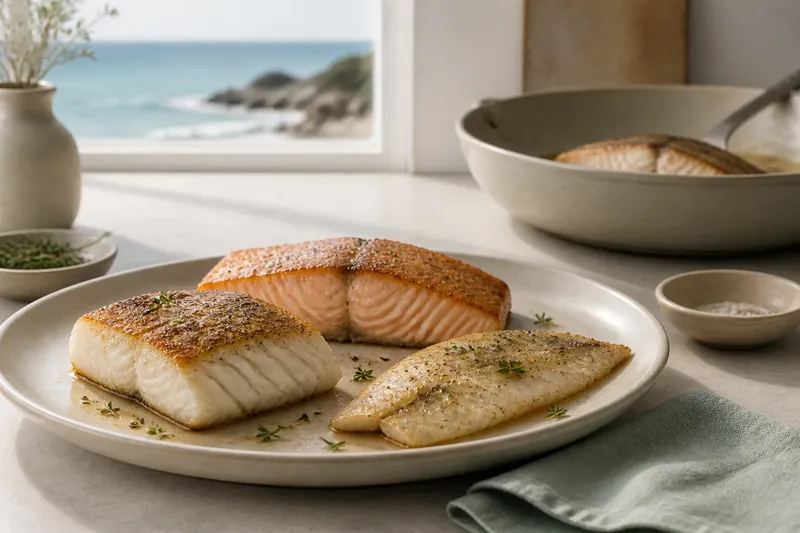
A fillet of pollock can look opaque at the edges while its centre still feels soft, and a thick piece of salmon may need a different approach from a thin sole. Why fish changes texture as it cooks comes down to what heat does to its proteins and moisture, but the visible and tactile signs vary with the cut. A cook can use those signs to make a better judgement than a single fixed time allows.
Start with the cut
Before the pan is hot, look at the fish’s shape. Thickness matters more than the name of the species when estimating how quickly heat will reach the centre. A narrow tail end cooks sooner than a thick shoulder cut, even when both came from the same fish. Pieces of uneven thickness may therefore finish at different moments.
Skin, bones and the way the fish is portioned also affect the cook. Skin can provide a barrier between the flesh and a hot pan, while a central bone may slow heat reaching the flesh beside it. A rolled fillet, folded fish or tightly packed pieces cook differently from flat portions because heat has less direct access to their centres.
Pat the surface dry with kitchen paper if you want direct browning in a pan. Surface water first needs to evaporate, which can delay browning and encourage the fish to steam. Drying does not remove moisture from inside the flesh; it simply changes what happens at the surface.
Choose the heat path
Decide how heat will reach the fish. In a frying pan, contact with the metal gives the underside a strong, direct heat. In an oven, warmer air surrounds the fish more gently. Steaming transfers heat through moist vapour, while poaching cooks fish in liquid that is hot but not vigorously bubbling. Each method changes the balance between surface colour, pace and moisture loss.
For a pan-cooked fillet, use a pan that can hold the piece flat and leave space around it. Crowding releases moisture into the pan and makes steady browning harder. For oven cooking, choose a dish that holds the fish without pressing pieces together. With poaching, keep the liquid below a rolling boil; rough bubbling can break delicate flesh apart.
There is no need to chase a dark crust on every kind of fish. Lean, delicate fillets may become dry before a deep crust forms, while firmer or fattier pieces can tolerate more surface heat. A modestly coloured surface is often enough; repeated pressing with a spatula is not worth the effort, since it squeezes out juices without telling you much about the centre.
Watch proteins tighten
Raw fish flesh is glossy and somewhat translucent. As it warms, its proteins change structure and the flesh becomes more opaque and firm. The change starts near the heated surfaces and moves inward. This is why the outer flakes can look set before the middle is ready.
As the proteins tighten, they hold moisture less readily. Gentle cooking gives the centre time to warm before the outer layers lose too much moisture. Fierce heat can create a wide band of dry, firm flesh around a still-soft middle, especially in a thick portion. The aim is not to eliminate all softness, but to bring the centre to a texture that suits the fish and the dish.
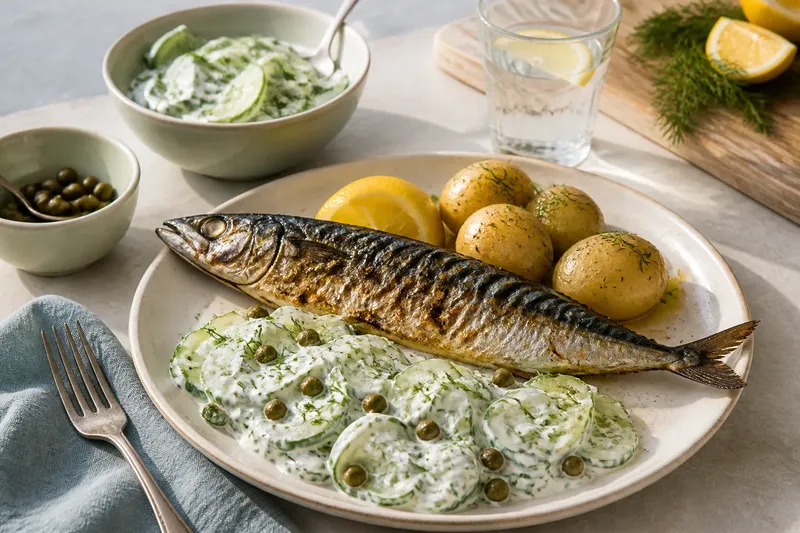
Different fish naturally feel different. A lean white fish such as haddock tends to separate into clean flakes; salmon stays richer and more yielding; mackerel has a firmer, oilier flesh. These are useful expectations, not rules. The cut, its condition and the cooking method can make two portions of the same species behave differently.
Check the centre
As the fish cooks, look at the side of the portion as well as the top. The opaque band creeping in from the edge shows how far heat has travelled. A thin metal skewer or the tip of a small knife can help you check the thickest part: insert it briefly, then touch it to your lip or wrist to sense whether the centre is still cool, gently warm or hot. Clean the tool before and after use.
To check flaking, press gently with a fork at the thickest point. Fish that is ready for a flaky texture should separate into moist layers with light pressure. If it resists and looks glassy in the centre, give it more time and check again. If it crumbles under the fork and appears dry, it has likely gone further than necessary for that texture.
Say you have a thick piece of cod beside a much thinner tail portion. If you place them in the same pan at once, the tail may be ready first. You could add the thick piece first, then place the tail in later, watching both for opacity and gentle flaking. The expected result is that the portions reach a similar finish without pretending they need identical cooking times.
Account for carryover
Fish does not stop warming the instant it leaves the pan or oven. Heat in the outer flesh continues to move towards the centre for a short while, so a portion taken off when it is just shy of the desired texture may finish as it rests. This effect is more noticeable in a thick piece than in a thin one.
Rest the fish briefly on a warm plate, uncovered or loosely covered. A tight cover traps steam and can soften a crisp surface. The fish should be served while it is still warm and moist; a long rest offers little benefit and may let a delicate piece cool too far.
Questions about texture?
Why does fish turn dry?
As cooking proteins tighten, they release moisture, and prolonged or fierce heat can leave the flesh firm and dry. A thick piece may also be overdone at the edges while its centre is still catching up.
Why is the centre still translucent?
Heat reaches the centre last, particularly in a thick or folded portion. Check the thickest area rather than judging only by the surface, and continue cooking gently if it remains cool and glassy.
Should fish flake easily?
Flaking is a useful sign for many cooked fillets, but not every fish or preparation should be judged by loose flakes. Some oily fish and gently cooked portions remain tender and cohesive when ready.
Can I rely on the same cooking time each time?
No single time suits every thickness, starting temperature, pan or cooking method. Use timing as a prompt to begin checking, then judge the centre and texture directly.
Use the right safety cue
Texture is useful for judging quality, but it is not a substitute for food-safety guidance where that matters. Follow the handling and cooking advice on the fish’s label or from the relevant food-safety authority, especially for people who need extra care around foodborne illness. When a recipe or cooking method depends on a specific temperature, use a clean food thermometer and follow that guidance rather than relying on appearance alone.
Once you understand the sequence—surface heat, changing opacity, a firmer edge and a centre that yields gently—you can adapt to the fish in front of you. Why fish changes texture as it cooks is not a puzzle with one timer-based answer: thickness sets the pace, moisture shapes the finish, and careful checks tell you when to stop.