A Late-Summer Shore Supper, Planned Backwards
Plan a late-summer shore supper around the serving moment, with dishes that travel neatly, hold their character and leave the cook free to join in.
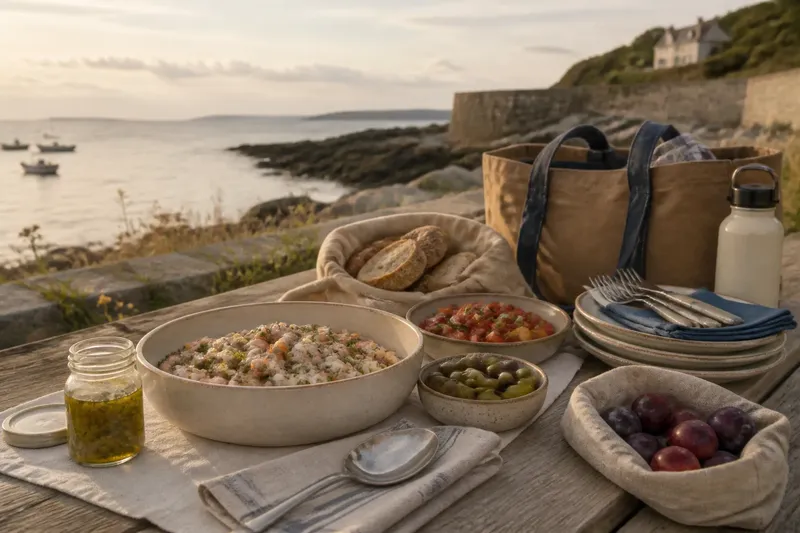
A late-summer shore supper often begins with someone balancing a bowl on a folded jumper while the wind lifts the napkins. Planning a late-summer shore supper backwards means starting there: with the serving moment, the available table, and the hands you will have free. Then choose food that can make the journey and wait without demanding your attention.
Think of this as field notes, not a fixed menu. A sheltered beach picnic, a harbour-side bench and a garden above the shore each ask for different containers and dishes. The useful question is not how to recreate a dining room outdoors. It is what will still be pleasant to eat when the plates are passed around.
Begin at the table
Picture the meal as it will actually happen. Are guests sitting on benches, standing near a sea wall, or gathering around a picnic blanket? Is there a proper surface for serving, or only laps? Will everyone arrive together, or will people drift in from a walk?
Those details decide more than a recipe does. A broad platter may look inviting on a stable table but become awkward on a blanket. A dish that needs a last-minute flourish can turn the host into the person hovering over a bag while everyone else eats.
Sketch the serving moment in a few plain notes: where the food will sit, what people will use to eat it, and how it will be handed round. A clean cloth or washable picnic mat can define the serving area. Keep cups and drinks apart from the main dish so a passing elbow does not send them through the food.
Allow for the shore itself. Sand, uneven ground and a breeze all make loose paper, delicate garnishes and tall stacks of plates less appealing. A lidded container, a low serving bowl and cloth napkins are often easier to manage than a collection of small dishes.
Choose the waiting dishes
Once the setting is clear, choose food by how it behaves while waiting. Many coastal meals benefit from a mix of substantial, forgiving dishes and something fresh to lift them. A bean salad with chopped parsley, lemon and olive oil can be dressed ahead. So can a tray of roasted peppers or a potato salad with a mustard dressing. They are easy to portion and do not depend on a crisp edge or a delicate arrangement.
For a seafood element, consider a dish that is intentionally served chilled or at room temperature, such as a well-seasoned fish pâté or a seafood salad made and stored safely at home. Keep it in a sealed, chilled container until serving. A lemon wedge or a small jar of chopped herbs can be carried separately and added at the table, where they remain fresh rather than wilting during the journey.
Not every dish needs to be coastal in the narrow sense. Bread, tomatoes, olives or a sharp pickle can give the seafood room to stand out without competing with it. Choose one or two accompaniments that have a clear role. A crowded spread is harder to carry and harder to serve than a few generous dishes.
What is not worth the effort? Anything that requires precise assembly in a gusty spot: finely stacked canapés, crisp fried food expected to stay crisp, or a sauce that must be whisked at the shore. The labour rarely improves the meal once the wind, walk and waiting are part of the equation.
Plan the journey
Travel well does not mean merely surviving a trip. It means arriving in a state that still makes sense to eat. Favour sturdy containers with secure lids, and match their size to the food so a salad does not slosh around in a mostly empty tub. Pack dressings, herbs and crunchy toppings separately when their texture matters.
Put heavier containers at the bottom of the bag and softer items above them. A chilled bag can hold seafood and other perishable food; use cold packs and keep the bag closed as much as practical. Set it in the shade at the destination rather than leaving it beside a sun-warmed wall or in a parked car. Follow food labels and local food-safety guidance for storage and serving.
Separate the serving kit from the food. A small cloth bag can hold a serving spoon, tongs, a bread knife with a cover, plates, napkins and a rubbish bag. If the menu includes a dip, pack a spoon for it rather than using the one that has just served the salad. This modest bit of order prevents the familiar rummage through bags while food sits uncovered.
Think about the route as well as the distance. A container that sits flat in a car may tilt in a bicycle basket or be awkward on a footpath. For a walk-in spot, a small number of stackable tubs is usually easier than a wide platter. At a shore location, take all packaging and food scraps away; do not leave them for the tide or wildlife.
Give the menu a rhythm
A relaxed supper needs a sequence, even if no one calls it one. Start with something guests can pick up while coats and bags are put aside: bread, a bowl of olives or sliced tomatoes. Put the main dish within easy reach once everyone has settled. Finish with fruit or a simple cake that can be cut without fuss.
Keep the serving order in mind when packing. The first food should be accessible without unloading every container. Put the meal’s centrepiece on top or in a separate tote, and leave dessert wrapped until it is wanted. If the group will eat in waves, choose food that can be served in portions rather than something that must be cut and passed in one exact moment.
Say you are meeting friends at a sheltered harbour bench after an afternoon walk. You decide the meal will be served from the bench, with everyone using plates on their knees. You pack a chilled seafood salad in a snug lidded tub, a separate jar of dressing, bread in a cloth bag and plums for pudding. At the bench, the salad can be dressed and spooned out without a platter, while the bread and fruit stay ready for the later courses. The expected result is a meal that follows the gathering’s pace rather than interrupting it.
Keep the quantity of dishes modest. A dependable main, a generous accompaniment and a simple ending give people choice without filling every available surface. If guests are bringing food, agree on broad roles such as bread, salad or dessert. That avoids arriving with several similar dishes and no serving spoon.
Set up for the shore
Before opening the food, choose a stable, clean place to serve. A low table or firm bench is easier than a sloping patch of sand. If the ground is the only option, keep containers closed until serving and place them on a clean mat rather than directly on the shore. Let the food come out in small batches where that suits the setting; the rest can stay packed and chilled.
Bring enough practical kit for the menu, not a miniature kitchen. A serving spoon, tongs, a small knife if needed, reusable plates and napkins will cover many simple meals. A damp cloth helps with sticky fingers and spills. A spare container can take leftovers for the journey home, provided the food has been kept and handled appropriately.
Wind changes what is comfortable. Use napkins that will not sail away, keep lids beside their containers and avoid placing lightweight plates at the edge of the table. Put a bag or basket on the sheltered side as a barrier for loose items. These are small adjustments, but they can stop a meal from becoming a sequence of rescues.
Leave the place as you found it. Pack out food scraps, shells brought from home, wipes and packaging. At busy shore spots, use existing bins where available, but do not assume a bin will be nearby. A rubbish bag packed with the serving kit makes the final sweep part of the plan rather than an afterthought.
Questions before packing?
What seafood suits an outdoor supper?
Choose seafood that is meant to be served chilled or at room temperature and can be kept cold during transport. A sealed fish pâté or a prepared seafood salad may suit, while food that depends on staying hot and crisp is harder to manage outdoors.
How can I keep food cold?
Use an insulated bag with cold packs, keep it closed and place it in the shade. Take only what you need for serving out of the bag, and follow the food’s label and relevant local guidance for safe storage.
What if there is no table?
Choose food that can be served from a low, stable container and eaten from plates on laps. Avoid dishes that need assembly, a knife at each place or a long line of small bowls.
Can guests bring dishes?
Yes, if the contributions are coordinated by role rather than left entirely open. Ask for one accompaniment or dessert, and check that each dish has a suitable container and serving utensil.
Leave room for the evening
There is no need to make the meal look like a photograph. A clear place to serve, food that travels calmly and a small kit of useful utensils matter more than decorative extras. Let the menu reflect the shore you are visiting: local bread from a village bakery, tomatoes from a nearby grower, or seafood bought from a fishmonger who can advise on suitable handling.
Planning a late-summer shore supper backwards makes the final choices easier. Start with how people will sit, reach and eat; then choose dishes that can wait, pack them for the route, and keep serving simple. The last useful check is the walk back: leave one hand free for the rubbish bag, and make sure every container you brought can come home with you.