Fresh, Canned or Frozen Fish: Choosing the Right Form for Dinner
Fresh, canned or frozen fish can each suit a different dinner. Choose by timing, texture and dish, and make coastal fish easier to use well.
You have a pan warming, a lemon on the board and no clear plan for the fish. Choosing fresh, canned or frozen fish for dinner is less about ranking them than matching the form to the meal you can actually make.
Each brings a different kind of convenience and texture. Fresh fish suits meals where its distinct flakes are the point; frozen fish gives you a reserve for later; canned fish is ready to join a dish with little preparation. The best choice depends on timing, cooking method and how much the fish needs to hold its own.
When fresh fits
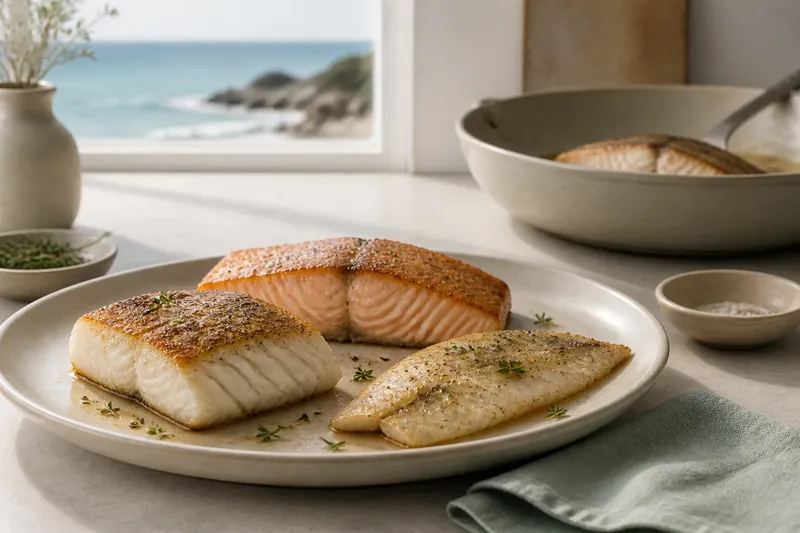
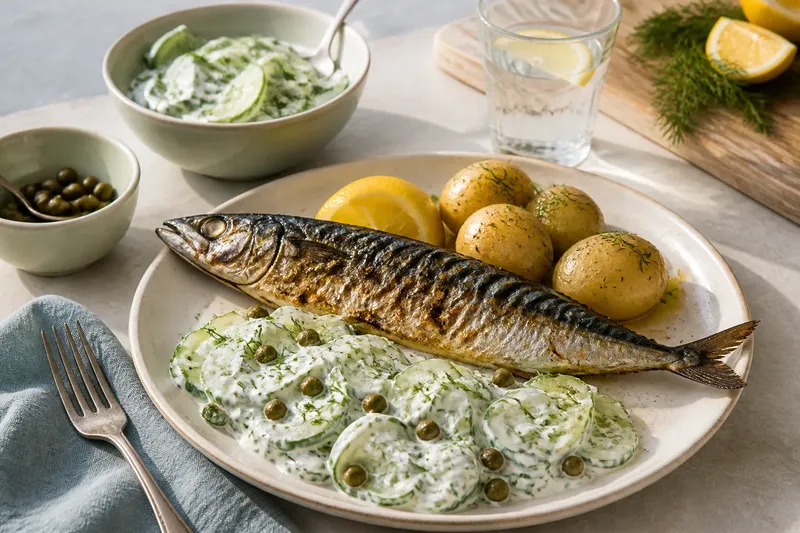
Choose fresh fish when you can buy it close to cooking time and want a clean, distinct piece for the centre of the plate. A fillet of mackerel, hake or sea bass can be cooked simply and served with potatoes, greens or bread. Its shape and tender flakes are easy to appreciate when the rest of the meal stays uncomplicated.
Fresh also suits dishes where appearance matters: a whole fish to share, neat portions for a tray bake, or fillets placed over a salad. At the fish counter, ask what is available and how it has been kept. Look for flesh that appears moist rather than dried at the edges, and a mild smell of the sea rather than a strong, sour or ammonia-like odour. If something seems off, choose another option.
The trade-off is timing. Fresh fish is a poor fit for an uncertain evening if you have no suitable way to keep it chilled and cannot cook it soon. Buy only what you have a plan to use, and let the fishmonger’s advice help determine which species suits that plan.
When frozen works
Frozen fish is useful when shopping and cooking happen on different days. Keep portions in the freezer for a meal that might otherwise rely on whatever is left in the cupboard. Plain frozen fillets work well in soups, pies, curries and tray bakes, where they can be folded into a larger dish rather than needing a pristine appearance.
Thawing affects convenience. A portion can be moved to the fridge ahead of time, or cooked from frozen if its packaging and cooking instructions allow. Avoid leaving fish to thaw for hours on a warm counter. If a fillet releases liquid as it thaws, patting it dry can help it brown rather than steam in a hot pan.
Frozen fish may be less suited to a delicate presentation if the fillet has softened or broken during thawing. That is not a reason to discard it: change the dish. Flakes can still enrich a chowder, fish cake or pasta sauce, where a perfect edge is unnecessary.
When canned makes sense
Canned fish is the quickest choice when the meal needs flavour and substance without raw preparation. Sardines, salmon, tuna and mackerel can go into a sandwich, a bean salad, a jacket potato or a simple pasta. Their texture is already cooked and usually softer than a fresh fillet, so treat them as an ingredient to mix or layer rather than a piece to sear.
The liquid in the tin can be part of the decision. Fish packed in oil brings richness; fish packed in water or brine may suit a lighter mixture, though you may want to drain it. Taste before adding salt, especially when the fish is packed with salt. Check the label for the species, ingredients and storage guidance, and follow the manufacturer’s instructions for handling and keeping leftovers.
Canned fish is not a substitute for every fresh-fish dish. It will not give you the crisp surface or separate flakes of a just-cooked fillet. Its strength is being ready when the rest of dinner is still undecided.
Match fish to dinner
Start with the job the fish must do, rather than the form you usually buy.
- A simple main: Choose fresh fillets if you can cook them soon and want the fish to stay in clear portions.
- A meal later in the week: Choose frozen portions if you can plan for thawing or the pack allows cooking from frozen.
- A fast lunch: Choose canned sardines, tuna or salmon for toast, a sandwich or a salad that needs no separate cooking.
- A soup or pie: Choose frozen fish for flexible portions, or canned fish if its softer texture suits the recipe.
- A dish with several strong ingredients: Canned mackerel or sardines can contribute savoury depth among beans, tomatoes, herbs or greens.
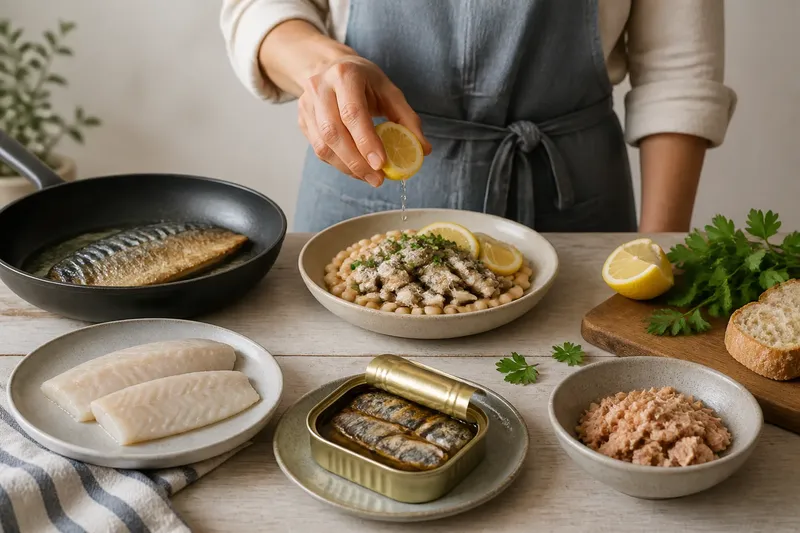
Say you have half an hour, a tin of butter beans and no fresh fish at home. A tin of sardines could be drained, flaked through warm beans with parsley and lemon, and served with toast. The expected result is a substantial, quick meal in which the fish adds a pronounced savoury flavour; it will not resemble a fresh fillet dinner, and it does not need to.
Questions at the counter?
Is fresh fish always the best choice?
No. Fresh fish is a good fit when it can be kept cold and cooked soon, but frozen and canned forms may suit your schedule or dish better. Judge the fish by condition and intended use, not by the word “fresh” alone.
Can frozen fish go straight into a pan?
Sometimes, but it depends on the product and cooking directions. Check the packaging, since some fish should be thawed first and cooking times vary by type and portion.
Which canned fish works in a salad?
Tuna is mild and easy to combine with crisp vegetables, while sardines and mackerel have a stronger, richer flavour. Choose according to the other ingredients and taste the fish before seasoning the salad.
What should I do with leftover fish?
Cool and store it promptly in a suitable covered container, then follow the food-safety advice for that product and your local guidance. If you are unsure how long it has been kept or whether it was handled safely, do not serve it.
What need not matter
There is little value in trying to make canned fish look like fresh fish, or in buying a delicate fillet for a dish that will break it into small pieces. Nor is elaborate seasoning necessary simply because the fish is coastal: lemon, chopped parsley, a little butter or good olive oil can be enough, depending on the form and the dish.
For choosing fresh, canned or frozen fish, let the meal’s structure make the decision. Fresh can provide the centrepiece, frozen can wait in reserve, and canned can turn a few cupboard ingredients into dinner. Keep that distinction in mind at the shop, and the useful question becomes not which fish is best, but which one fits the evening you have.