Tide Table Cooking for a Shore-Smart Supper
Tide table cooking helps you plan a coastal meal around shore access, safe handling and kitchen time, with sensible alternatives when gathering falls through.
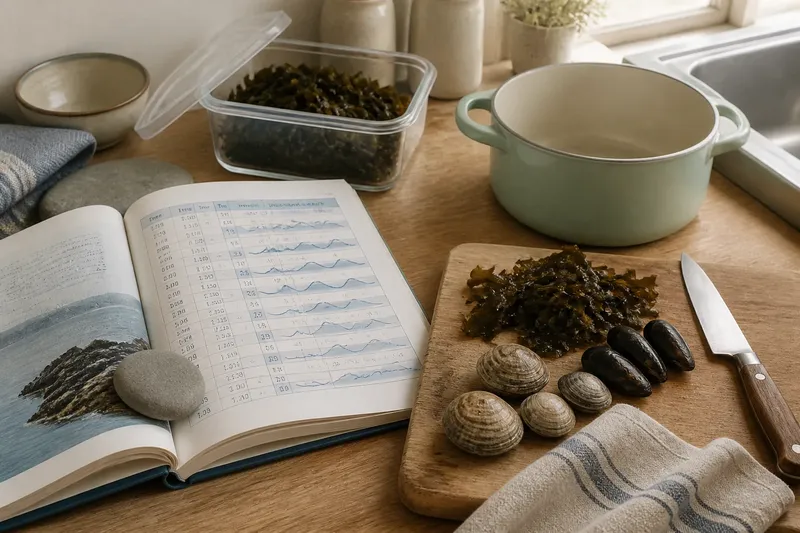
A tide table lies open beside a chopping board, while a pot waits by the sink. Tide table cooking starts with a simple choice: does the shore visit fit the day, and can the meal still work if it does not?
A tide table can help set the hour for a walk, but it cannot confirm that a place is open, safe or suitable for gathering. Local rules, conditions and food-handling advice matter too. A practical routine keeps those limits in view and treats shore-sourced ingredients as one option among several.
Cook after gathering
Gathering for the day’s meal keeps the outing and cooking in the same part of the day. It suits a cook with flexible timing, a familiar route and clear knowledge of local collection rules. A simple dish, such as broth or pasta, can accommodate a modest change in what is available.
Before leaving, choose a fallback meal that does not depend on the shore. Bread with pantry soup or seafood bought earlier can fill the gap if weather, access or timing changes. That way, turning back does not leave supper stranded.
Bring suitable clean containers and only gather what local guidance permits. Check the relevant advice on species identification, collection and preparation before eating anything gathered. A tide prediction is not a substitute for those checks.
Plan for holding
Sometimes the best time to visit the shore does not match the time available for cooking. A holding plan can help, but it must suit the ingredient. Shellfish, seaweed and other gathered foods do not all have the same storage or preparation needs.
Check local food-safety guidance before deciding how long an ingredient can wait or how it should be handled. If the guidance calls for prompt preparation, change the meal plan rather than assuming a clean container makes a delay suitable. Keep gathered food separate from other food, and note where and when it came from if that helps you follow the relevant advice.
Say you have a free morning at a familiar shore where gathering is permitted, but a work shift begins before lunch. You collect a small amount of edible seaweed in a clean container, then check local handling advice before assigning it to the next meal. If that advice supports the timing, you plan a dish for later; if it calls for earlier use, you cook sooner or leave the ingredient out. The decision follows the guidance, not the convenience of the original plan.
Let the tide shape supper?
Does the tide determine what can be gathered?
No. A tide table indicates predicted water levels, but it does not establish safe conditions, permission to collect or reliable species identification. Check local access information and current conditions before deciding whether to visit or gather.
Can a tide-led meal use bought seafood?
Yes. A fishmonger or market can supply the meal while the tide sets the timing of a walk or shapes the day’s routine. Choose a preparation that suits the seafood available rather than expecting the shore to provide a particular ingredient.
What if the tide and supper do not align?
Keep the meal independent of the outing by choosing a pantry dish or seafood already bought. The walk can remain worthwhile even if it produces no ingredient for the table.
Is a tide table enough to plan a visit?
No. It cannot tell you every condition on the ground or whether access is allowed. Check local advice, and do not enter a closed or unsafe area.
Choose a routine
Use a cook-after-gathering plan when access, timing and preparation all fit the day. Use a holding plan only when the ingredient’s handling guidance allows it. If gathering is impractical, let the tide shape the outing and buy seafood separately.
If local guidance permits gathering at the intended shore, plan a visit; otherwise, choose a walk without collecting or buy the ingredient.
If access information shows the route is open, consider the visit; if it is closed, choose another route or stay away.
If current conditions appear suitable and the route feels manageable, continue cautiously; if they do not, turn back and use the meal fallback.
If you can identify the intended species using reliable local guidance, follow permitted collection rules; if identification is uncertain, leave it where it is.
If handling advice allows the ingredient to wait until the planned meal, follow that plan; if it calls for prompt use, cook sooner or leave it out.
If the gathered amount suits a flexible dish, make that dish; if it does not, adjust the recipe or use a pantry alternative.
It is not worth chasing a particular ingredient across difficult ground or treating a tide prediction as permission. Keep the route and meal modest enough that either can change without pressure.
Keep kitchen timing
Make a note of a few suitable shore-walk windows alongside the week’s meal plans, then leave room for substitution. If a visit falls through, use the same cooking idea with market seafood or a pantry ingredient.
Tide table cooking works best as a way to organise the day, not as a promise of what dinner will contain. Check the local advice before gathering, and let the kitchen adapt when conditions or timing say otherwise.